


Helmet Usage

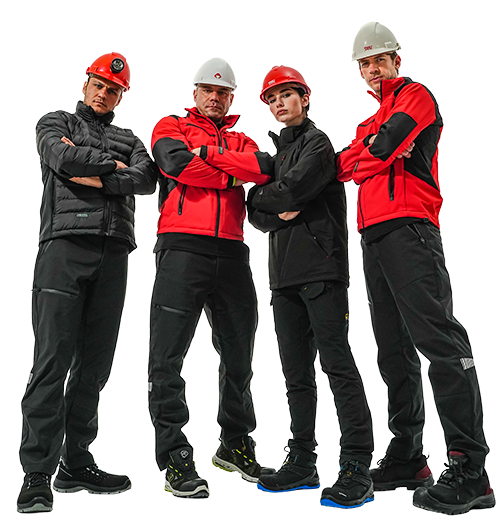
Helmet Usage
A Critical Protection in Occupational Safety
Among occupational safety equipment, head protection is one of the most critical areas directly affecting life-threatening risks. In high-risk working environments such as construction, mining, energy, industry, and heavy manufacturing, wearing a safety helmet is not a choice—it is a mandatory safety measure.
Safety helmets are personal protective equipment (PPE) designed to protect the head from falling objects, impacts, collisions, and, in some cases, electrical hazards.
At BBU® Safety, the helmets we develop are engineered to meet the demands of high-risk environments and are manufactured in compliance with international safety standards.
Why Should Safety Helmets Be Used?
The head is one of the most sensitive and vital parts of the human body. A significant portion of workplace accidents results in head injuries.
Safety helmets provide protection against:
- Falling objects from above
- Impacts with fixed surfaces
- Blows from moving equipment
- Electrical hazards (in applicable helmet types)
- Unexpected dangers in construction and industrial environments
When used correctly, a safety helmet distributes impact energy and significantly reduces the risk of severe head trauma.
How Are Industrial Safety Helmets Designed?
Industrial safety helmets are not just hard shells. They consist of two main protection systems:
1️⃣ Outer Shell
The outer shell is designed to disperse impact energy.
BBU® Safety helmets use high-density polyethylene (HDPE), offering both durability and lightweight performance.
This ensures:
- High impact resistance
- Long-term wearing comfort
- Reduced strain on the neck and shoulders
For example, some industrial helmets weigh approximately 350 grams, making them lighter than many alternatives on the market.
2️⃣ Internal Suspension System
The real protective performance of a helmet comes from its internal suspension system.
This system:
- Absorbs and distributes impact energy
- Maintains a safe distance between the head and the shell
- Adapts to the user’s head shape
BBU® Safety helmets feature an 8-point suspension system and an adjustable ratchet mechanism, providing both safety and ergonomic comfort.
How to Use a Safety Helmet Correctly
For a helmet to provide effective protection, it must be used properly.
The following rules are critical:
✔ Proper Fit
The helmet must fit securely and should not be loose. It should be adjusted using the ratchet system according to head size.
✔ Do Not Remove the Suspension System
Some users remove the inner suspension for comfort. This significantly reduces the helmet’s ability to absorb impact.
✔ Use the Chin Strap
In elevated work, windy environments, or dynamic work sites, the chin strap must be used.
✔ Do Not Wear It Backwards
Helmets are designed for a specific orientation. Wearing them incorrectly can reduce impact performance.
Helmet Replacement Period
Safety helmets are not designed for lifetime use. Over time, materials degrade due to UV exposure, temperature changes, and mechanical wear.
General recommendations:
- 3–5 years of usage
- Replace immediately after any impact
- Replace if cracks, deformation, or hardening are observed
Regular equipment inspections are a fundamental part of occupational safety culture.
International Helmet Standards
A high-quality safety helmet must comply with specific standards.
EN 397 is the European standard for industrial safety helmets.
This standard includes testing for:
- Impact resistance
- Penetration resistance
- Flame resistance
- Temperature performance
BBU® Safety helmets are manufactured in compliance with EN 397 + A1:2012 standards.
In Which Sectors Is Helmet Use Mandatory?
Helmet use is mandatory, especially in the following sectors:
- Construction and job sites
- Mining
- Oil and gas
- Refineries and petrochemical plants
- Shipbuilding and shipyards
- Energy and electrical infrastructure projects
- Tunneling and infrastructure works
In these sectors, helmets are a fundamental component of personal protective equipment.
Conclusion
Occupational safety is not only about using equipment—it is a matter of safety culture.
Properly designed, standard-compliant, and ergonomic helmets are among the most critical equipment that protect workers’ lives.
At BBU® Safety, our head protection solutions (anchor text for internal link) are designed to provide maximum safety and comfort in high-risk working environments.